Translate

culture etiketine sahip kayıtlar gösteriliyor. Tüm kayıtları göster

9 Aralık 2017 Cumartesi

Türklerin İzini Silen Ermeniler


Ermeniler, 1918-1991 yılları arasında "Qərbi Azərbaycan"da ("Batı Azerbaycan" - şimdiki Ermenistan) 849 yerleşimin adını değiştirmiştir. Hatta bazılarını iki kere değiştirmiş ve haritalardan silmiş. 


məzarlıq ermənilər tərəfindən dağıdılıb, Urud qalasının və monastırın xarabalıqları qalır.
Urud məzarlığında Qafqaz Albaniyası dövrünə aid bədii təsvirli məzar daşı
Urud - Qarakilsə / Zəngəzur
Azərbaycan -  Memarlıq Abidələri Kompleksi
Türk Tarixi


QƏRBİ AZƏRBAYCANIN TÜRK MƏNŞƏLİ TOPONİMLƏRİ
İbrahim Bayramov


İndi Ermənistan adlanan Qərbi Azərbaycanın türk mənşəli toponimlərinin öyrənilməsi elmi əhəmiyyət kəsb etməklə yanaşı, siyasi mahiyyət də daşıyır. Ərazinin toponimləri (oykonim, oronim, hidronim) aydın şəkildə göstərir ki, Azərbaycan türkləri qədimdən bu ərazidə yaşamışlar. Bu da Azərbaycan türklərinin indi Ermənistan adlanan ərazinin aborigen xalqı olduğunu təsdiqləyir. Çar Rusiyası 1828-ci il Türkmənçay sülh müqaviləsindən sonra Cənubi Qafqazda, o cümlədən indiki Ermənistan ərazisində müxtəlif illərdə kameral siyahıyaalmalar aparmışdır.


İndiki Ermənistan ərazisində ilkin siyahıyaalma 1831-ci ildə keçirilmişdir. 1831-ci il siyahıyaalmasından aydın olur ki, bu ərazidə 1830 - cu ilə kimi 54.857 nəfər azərbaycanlı, 14.469 erməni yaşamışdır (386, s.543-650;). Ermənilər 1828-ci ildən sonra İran və Türkiyədən kütləvi surətdə indi Ermənistan adlanan əraziyə köçürülmüşlər (386, s.543-650).


XIX əsrin əvvəllərindən XX əsrin əvvəllərinə qədər bu ərazidə yaşayan əhalinin sayı və etnik tərkibini özündə əks etdirən Z.Qorqodyanın «1831-1931-ci illərdə Sovet Ermənistanın əhalisi (İrəvan, 1932, erməni dilində) kitabında qeydə alınan 2310 oykonimin (yaşayış məntəqəsinin) 2000-dən çoxu türk mənşəli, 300-ə yaxını isə ərəb və fars mənşəlidir. Bu da təbiidir. Çünki hər bir xalq yaşadığı əraziyə, buradakı yer-yurd adlarına öz ana dilində ad verər. 


Bu ərazi Azərbaycan türklərinin tarixi vətənləri olduğu üçün toponimlərin 90% dən çoxu da yalnız türk mənşəlidir. Məhz ərazinin toponimləri tarixi həqiqətlərə şahidlik edir, ermənilərin gəlmə olduğunu göstərir. Əgər ermənilər buranın köklü sakinləri olsa idi, burada erməni dilinə məxsus toponimlər də olardı. Erməni mənşəli toponimlər 1935-ci ildən sonra indi Ermənistan adlanan Qərbi Azərbaycanda türk mənşəli toponimlərin kütləvi surətdə dəyişdirilməsindən sonra yaranmağa başlamışdır (266, s.249-280).


İndiki Ermənistanın toponimlərinin (oykonim, oronim, hidronim), urbonim, eləcə də qala, karvansara, körpü adlarının tarixi linqvistik baxımdan araşdırılması ərazisinin etnik tərkibi, relyefi, flora və faunası haqqında aydın təsəvvür yaradır. 


Qərbi Azərbaycanın türk mənşəli toponimlərinin tədqiqində əldə edilən nəticələri aşağıdakı kimi ümumiləşdirmək olar:


1. Tədqiqat nəticəsində aydın olur ki, indiki Ermənistan ərazisi Azərbaycanın tarixi torpaqlarıdır. Bu ərazidə 1920-ci ilə qədər müstəqil erməni dövləti olmamışdır. 1917-ci Oktyabr çevrilişindən sonra ərazidə Rusiyanın bilavasitə himayəsi altında Azərbaycan torpaqları hesabına Ermənistan Respublikası yaradılmış (29 noyabr 1920), Zəngəzur, Göyçə, Dərələyəz mahalları Azərbaycandan alınaraq yeni yaradılan Ermənistan Respublikasının inzibati-ərazi bölgüsünə daxil edilmişdir.


2. İndiki Ermənistanın türk mənşəli toponimləri ilk dəfədir ki, tarixi-linqvistik baxımdan geniş şəkildə tədqiqata cəlb edilir.


3. Tədqiqat nəticəsində təhrif edilmiş, ermənilər tərəfindən tarixi həqiqətləri gizlətmək üçün toponimlərdə edilən ixtisarlar müəyyənləşdirilmiş, mənbələr əsasında onların ilkin formaları bərpa edilmiş, hər bir toponimin yerləşdiyi ərazi dəqiqliklə göstərilmiş, coğrafi mövqeyi müəyyənləşdirilmişdir.


4. İndiki Ermənistan ərazisindəki türk mənşəli toponimlər mənəvi soyqırımına məruz qalmışdır. Qədim türk torpaqları olan Ermənistanda türklərə - azərbaycanlılara qarşı fıziki soyqırımı siyasəti ilə yanaşı, mənəvi genosid siyasəti də yeridilmiş, qədim tarixə malik coğrafi adlar dəyişdirilmişdir. Bu siyasət bir neçə mərhələdə həyata keçirilmişdir:


1) 1801-1918-ci illərdə;
2) 1918-1920-ci illərdə;
3) 1920-1935-ci illərdə;
4) 1935-1989-cu illərdə;
5) 1989-1994-cü illərdə.


5. İndi Ermənistan adlanan ərazidə hun, sak, şirak, kimmer(qəmər), qarqar, gencək, peçeneq, abar, qazan, abdal, quşçu, kapan, qıpçaq, oğuz, avşar, bayat, bayandur, yayçı, ivə, qayı, çəpni, kəngər, qaşqay, ayrım, qaraqoyunlu, sarıcalı, barani, baharlı və s. türk tayfaları yaşamışdır. Türk tayfalarının Qərbi Azərbaycanda yaşamaları bizim eradan əvvəl VIII-VII əsrlərdən başlayır. Bunu yazılı qaynaqlar, antik mənbələr, daş kitabələrlə yanaşı, ərazinin türk etnonimləri əsasında formalaşan toponimlər də(Hunud, Şəki, Gümrü, Ozanlar, Qəmərli, Qarqar, Şirak, Abaran,Qazan, Bayat, Afşar, Abdalağalı, Bcni, Polad Ayrım, Qaraqo:yunlu, Barana, Yayçı və s.) təsdiq edir. 


6. Qərbi Azərbaycanın oykonimləri qədim türk sözləri (balıq, art, alp, bək, bayır, arbat, saz, kömür, örən və s.), dialektizmlər (nüvək, binə, qılınc, qənşər, cəbə və s.), Azərbaycan dilinə məxsus ümumişlək xarakterli leksik vahidlər (kənd, oba, qara, şiş, əyri və s.), eləcə də başqa dillərdən (ərəb, fars, urartu) keçib Azərbaycan dilində sabitləşən və toponim yaradıcılığında iştirak edən sözlər (abad, gərni, ayar, van, qala, zeyvə və s.) əsasında formalaşmışdır. Bununla yanaşı, bir qrup oykonimlərin əmələ gəlməsində fərqləndirici əlamət bildirən sözlər (aşağı, yuxarı, böyük, kiçik, bala, birinci, ikinci) iştirak edir.


7. İndi Ermənistan adlanan Qərbi Azərbaycanın ərazisi dağlıqdır. Ərazi oroqrafık obyektlərlə zəngindir. Yazılı qaynaqlarda (Azərbaycan, erməni, rus dilli mənbələrdə) əksini tapan, informatorlardan topladığımız oronimlər tədqiqata cəlb edilmişdir. Bu oronimlər qədim tarixə malikdir. İndiki Ermənistanda erməni dilində yaranan oronimlər yoxdur. Oronimlərin hamısı Azərbaycan dilində yaranmışdır. Ərazinin oronimləri türk tayfalarının adları (şirak, arıqlı, bayat, abdal, varsaq, qazan, qaraqoyunlu, alagöz, kəngər, kənəkçi və s.), qədim türk sözləri (bak//bək, art, oy, yazı, bal, daşt, kömür və s.), müsbət (qaya, quzey, dik, yal, yoxuş, taxta və s.), mənfi (dərə, düz, qala, çuxur və s.) relyef bildirən sözlər, metoforikləşmiş sözlər (burun, daban, barmaq, bel, baş, qaş, və s.), Azərbaycan dilində işlənən ümumişlək sözlər (şiş, tüklü, arx, yaylaq, yayla, dəlik və s.) və coğrafi terminlər əsasında formalaşmışdır.


8. İndiki Ermənistan ərazisindəki su obyektləri - hidronimlər Azərbaycan dilində yaranmışdır.


9. Qərbi Azərbaycan ərazisi zəngin bitki örtüyünə malikdir. Ərazidəki bitki adları (ardıc, armud, bənövşə, baldırğan, buğda, yarpız, sarımsaq, qamış, şatn, qoz və s.) əsasında fitotoponimlər (Artız, Arcut, Baldırğanlıq, Baldırğanlı, Qozluca, Armudlu, Yarpızlı, Şamlıq, Bənövşəbuşt, Qamışgöl, Qamışlı və s.) formalaşmışdır.


10. Qərbi Azərbaycanın toponimləri (oykonim, oronim və hidronimlər) mənaca antropotoponim, etnotoponim, orotoponim, hidrotoponim, fitotoponim, zootoponim kimi qruplaşdırılır. Bununla yanaşı ərazinin toponimlərinin müəyyən qismi təsvir əsasında formalaşmışdır.


11. Ərazinin toponimləri quruluşca üç yerə (sadə, düzəltmə, mürəkkəb) bölünür.


12. İndi Ermənistan adlanan Qərbi Azərbaycanda istər qədimdən, istərsə də müasir dövrdə mövcud olan mahal, rayon, karvansara, məhəllə, körpü, qala, meydan, tarla, meşə, çöl və s. adlar da tədqiqatdan kənarda qalmamışdır.


13. Ərazinin yaşayış məntəqələrinin əhalisinin etnik tərkibi ilk dəfə olaraq konkret mənbələrə istinadən verilmiş, ermənilərin haradan, nə vaxt köçürülmələri göstərilmişdir. Eyni zamanda hər hansı yaşayış məntəqəsindən azərbaycanlıların nə vaxt deportasiya olunması da öz əksini tapmışdır.


14. Qərbi Azərbaycanın türk mənşəli toponimlərinin formalaşmasında iştirak edən sözlərin başqa türk dillərində müxtəlif fonetik formalarda işləndiyi yeri gəldikcə qeyd edilir. 


İbrahim Bayramov /PDF
QƏRBİ AZƏRBAYCANIN TÜRK MƏNŞƏLİ TOPONİMLƏRİ, 2002 - Bakı


"Qərbi Azərbaycan: tarixi həqiqətlər və ya Ermənistanın etnik təmizləmə siyasəti" /LİNK

The first chapter "Historical Geography of Western Azerbaijan". In this chapter, expressing his attitude towards the works written in the Soviet period, he explained the fact that Azeri Turks were an aboriginal population of these places, including Kimmer, Saka, quagmire, Chirak, Karkar, Pecheneg, Khazar, Shirak, Chengen, Oguz, Sabunchu, Bahar, the source of information collected from sources such as Ağvan, Qacar, Kazak, Afşar, xalaç, şamlı, ustaklı, türkmen, ayrım, black hat, muğanlı, rags and other tribes.
"Western Azerbaijan: Historical Truths or Armenian Ethnic Cleansing Policy" book by I.Bayramov
Mənəvi Soyqırım: Tarixin Qan Yaddaşı - İbrahim Bayramov
(Manevi Soykırım: Tarihin Kan Hatırası)


ERMƏNİ VANDALİZMİ: LİNK
Əsirlikdə olan Azərbaycan abidələri


24 Ekim 2015 Cumartesi

Türk kökenli Ermeniler


Anadolu'nun güney-doğu bölgelerinde ve Azerbaycan'da hıristiyanlığı kabul eden Kıpçak Boylarına da "Ermeni", "Alban" demişler ve Türk kökenli bu "Ermenilerden" günümüzde Türkçe bir çok yazılı belgeler malumdur.


Prof.Dr.Firudin Celilov Ağasıoğlu
Ermeniye hükümdarı Artaşes'in (Artaş'ın / Artaxias I / Ertaş) Türkçe Yazıtları: MÖ.2.yy


Görüldüğü gibi, bizim varyantda yanlız 4.satırın ilk harf resimde olduğu gibi çizgisi azıcık eğilmiştir. Bu işe başkalarının r, n, d gibi okuduğu sesi değil, b sesini bildiren işarettir ve hemin harf 2.satırın dördüncü işaretinde de özünü gösterir. İki yerde geçen "y" sesinin hatta "z" dialekt varyantı ile okursak, yine anlam değişmez, bireyi sözcüğü barzi (marzi) ve yeritir sözcüğü de zeritir şeklinde Kıpçak ağzını sergiler. Kalan işaretler ise diğer uzmanların verdiği işaretlerden farklanmıyor.

Ortya böyle bir soru çıkar, neden ilk Ermeniye hükümdarı sayılan Artaş sınır taşları üzerindeki yazıyı 
ermenice (Hay dilinde) değil, Türk dilinde yazdırmıştır?

Bu soruya bir neçe cevap verile biler, Artaş'ın kendisi Hay değildi, taşların bulunduğu bölgede Türk (Azer) boyları yaşıyordu. Ermeniye bölge adı idi ve orada yaşayanların az kısmı Hay idi, sonralar bu Haylar da bölge ahalisi gibi ermeni adlanmıştır.

Aslında bu cevaplar bir-birini tamamlayan yorumlar mantığına dayanır, böyle ki, Artaş'esten yüzyıllar sonra da aynı durumla karşılaşırız: Anadolu'nun güney-doğu bölgelerinde ve Azerbaycan'da hıristiyanlığı kabul eden Kıpçak boylarına da "ermeni", "alban" demişler ve Türk kökenli bu "Ermenilerden" günümüzde Türkçe bir çok yazılı belgeler malumdur.

Ermenistan İlimler Akademisi'nde saklanan sınır belgesi taşların Batı Azerbaycan'ın eski ahalisi hakkında verdiği bilgi çok önemlidir. Görüldüğü gibi, o çağlarda Ön Asya'nın farklı bölgelerinde işlek olan aramey yazısı Göyce bölgesine de gelip çatmıştır. Artaş meliğin gösterişi ile merz taşının iki alan arasındaki sınırda kondurulması (koyulması) hakkında olan bu yazılar ise henüz azer türkçesinin en eski yazı örneğidir. 2000 yıldan artık toprak altında kalan bu yazılı taşlar gibi belgeler 
bulundukça tarihin gerçek yüzü de aydın görecektir.


"Adları MÖ 4.yüzyıldan itibaren kayda alınmıştır. Alban ismi antik kaynaklarda Albanya, Orta Frasçada Ardan, Arapçada Arran, Gürcücede Rani, Ermenicede Ağvan, Süryanicede Aran şeklinde geçer. Strabon 26 Alban kabilesinden bahseder. Önce Sasanilere, sonra Doğu Roma'ya, Araplara ve Hazar Türklerine tabi olmuşlardır. En parlak dönemlerini 7.yüzyılın ikinci yarısındaki Cavanşir dönemidir (636-642 /680-681). Halkın gitgide İslamı kabul etmesi ve Ermeni baskısı dolayısıyla tarihten silinmişlerdir. Alban kilisesi ise Eçmiadzin'deki Ermeni katolikosluğunun (patrikliğinin) ısrarıyla 1836'da Peterburg St.Sinodu tarafından lağvedilmiştir. Böylece Alban adı da ölmüştür. 

Halen Azerbaycan ve Gürcistan'da yaşayan ve 1989 sayımına göre sayıları 8.849 olan Udinler, Albanların ahfadı sayılır. Udin dili bitişimli bir dildir ve bu dil Alban diline en yakın dil olarak kabul edilir.Alban dili Kafkas dillerindendir, Hint-Avrupa dillerinden değildir. Balkanlarda bizim Arnavut, batılıların Alban dediği halkla alakaları yoktur. albanlar Hıristiyanlığı ilk kabul eden millettir. Hıristiyanlığı MS 54 yılında kabul etmişler, bu din 313'te hükümdar Urnayr zamanında resmi devlet dini olarak ilan edilmiştir. Ermeniler Hıristiyanlığı Albanlar'dan sonra kabul etmişlerdir. 

Kalankatlı Moses'in Albanya Tarihi adlı eseri, başkta Kafkasya'nın en eski sakinleri Albanlar olmak üzere Türk, İran, Arap, Gürcü, Ermeni ve sair halkların tarihi için pek ehemmiyetlidir. Eserde Barsil, Hun, Hazar, Eftalit, Haylandurk gibi Türk kavimlerinden ve onların askeri, sosyal, dini yaşayışlarından bahsedilmektedir. Eserde Göktürk kitabeleri dikilmeden önce Kuzey Kafkasya Hunlarına ve Hazarlara ait han, hakan, cebu (yabgu), şad, tudun, alp ilutuer (alp il teber), il tigin, tarhan, Tanrı, Çorpan, Ovçu, Çathasar (şad Hazar), Honoğur, Varaçan; Türkçe-Farsça Kuar özel isim ve unvanları kayda alınmıştır. Bunların hepsi Türkologlarca çözülmüştür, sadece Kuar ve Varaçan (Varşan) tartışmalıdır. Türkan ve Türkistan sözlerinin de geçtiği kitap Türk kültürü için bu bakımdan da önemlidir." - Y.Gedikli


"Şüphesiz kitaplar müellifin ana dilinde yazılmıştır. O vakitler Albanya'da yaşayan muhtelif dili ve lehçeli 26 Alban kabilesinin artık tek bir dilde birleştiği, daha 5.yüzyıldan itibaren Aran dilinin Azerbaycan'ın kuzey topraklarında tek dil olduğu, şu anda tarih literatüründe şüphe doğurmamaktadır. Malum olduğu gibi 7.yüzyılın sonlarında Azerbaycan arazisi Arap Hilafeti tarafından zapt olunmuş, yerli Hıristiyan Albanların çoğu Müslümanlığı kabul etmek zorunda kalmış, şimdiki Dağlık Karabağ (Arsah)'da yaşayan Albanlar ise dinlerini muhafaza etmiş, ama Hıristiyan Ermenilerin ihatasında oldukların için gittikçe lisanlarını yitirmiş, Ermenileşmişlerdi. Alban kilisesini kendisine tabi eden Ermeni kilisesi, Albanlara mahsus abideleri Ermeni abidesi ilan etmiş, yazılı abidelerini ise kadim Ermeni dili olan Grabar'a tercüme ederek aslını tahrif etmiş ve bu yazıları Ermeni abidesi olarak yaymaya gayret göstermiştir. Aynı felaket, hakkında söz ettiğimiz Albanya Tarihi kitabının başına da gelmiş ve ecdadımızın bu abidesi de kadim Ermeni diline (tahrifine) aktarılmıştır." - Mahmud İsmayilov

Alban Tarihi / Son Hunlar Hazarlar Ermeniler Terekemeler
Kalankatlı Moses , Çeviri: Yusuf Gedikli / Selenge Yayınları

Elesger Siyabov Bey (tarihçi, Azerbaycan),  7. yy Ermeni tarihçi Moisey Kagankatvasî ile ilgili olarak: "Moisey Kagankatvatsi ermeni deyildi, Azerbaycanin guzey kisminin böyük bir erazisini ehate eden bir cografiyada uzun yillar var olmus ve kökenin esasen hristiyan türklerin olusturdugu Alban ve ya Agvan devletinin tarihini yazmis orta cag tarihcisi idi, sadece onun yazdigi Alban tarihi eseri orijinali kayb olmus bizim günümüze o eserin ermeni diline tercüme olunmus varianti gelib catmisdir." demiştir.


Kafkas Albanları Dili ve Edebiyatı
Prof.Dr.Bahtiyar Tuncay


Ermeni Sahtekarlıkları - Armenian Falsifications


1890 Kasımuşağı


Kasımuşağı halıları Azerbaycan halılarının en meşhur numunelerinden biridir. Dünyanın bir çok müzeleri ve galerileriyle birlikte şahsi kolleksiyonlarda da sergilenir. Karabağ halı okulunda Cebrail grubuna aittir. İlk defa Zengezur bölgesinin Hacışamlı kazasının (şimdiki Laçin) vadisine yerleşen Kasımuşağı obasında dokunmaya başlanmıştır.


Birkaç asır önce, "Kasımuşağı halıları"nın deseni nakış şeklinde kullanılmış ve "Kasımuşağı nakışı" olarak isimlendirilmiştir. Bir süre sonra "Kasımuşağı nakışı"ndan "Kasımuşağı halıları"nın modeli dokunuyor. Bu nedenle, yerel nüfusun ve eski halıcılar arasında günümüzde ve öncesinde bu halıya "Nakış halı" (Tikmə xalça) deniyor.


"Kasımuşağı halıları" dokuma noktalarına bağlı olmayarak kendi teknolojileri ve bedii özellikleri, kompozisyonları, motif ritmi ve renk armonisi bakımından birbirlerine benzerler. Bu halılarda arka, orta ve dış alanlarda kullanılmayan herhangi boş bir alan kalmamıştır.


"Kasımuşağı halısı" olarak adlandırılan halıların dokumasında ilkbaharda kazınan ve "yapagı" adlandırılan geleneksel olarak uzun yün elyaf kullanılırdı.


Çoğunlukla yedi doğal renk kullanılmıştır: beyaz, siyah, koyu kırmızı, koyu mavi, yeşil, sarı, kahverengi. "Kasımuşağı halıları"nın genel alanı koyu mavi, orta alanı koyu kırmızı renk iplikle dokunmuşdur. Halının merkezinde siyahla çevrili büyük bir göl (merkez medalyon) sahiptir. Merkez medalyon farklı öğeler, nakışlar ve bölümlerden oluşmaktadır.


Gasimushaghi Turkish Carpet with Swastika
in Turkish OZ/OG/ÖG symbol


"Kasımuşağı halıları"nın orta köşelerinin üst ve alt kenarları "kol'a" (S-şekilli motifleri) benzer bir beyaz desen ile süslenmiştir. S-şekilli motifler ("kol") sadece "Kasımuşağı halıları" desenine aitdir. "Kol'un" (S-şekilli motifler) içine ise bir ejderha deseni dokunmuşdur. "Kasımuşağı halıları"nda kullanılan ejderha motifleri Xətahi Ejderha halılarının deseninden taşınmıştır. Bazen, yerel nüfus arasında şu S-şekilli motifler yüzünden "Kasımuşağı halıları"na "Akkol hali" (Ağqol xalça) denir.


Her köşede kırmızı, siyah ve yeşil kancalı desen kullanılmıştır. Bu semboller "Kasımuşağı halıları"nda birçok yerlerde kullanılmaktadır ve yerel nüfus arasında bu semboller "kaynaq" adlandırılmışdır. Semantik anlamda bulunan bu tür "karmak" motifleri korunma anlamındadır. Efsaneye göre, bu motifler kötü değerlendirmelerden ve kötü ruhlardan insanları korumaktır.


"Kasımuşağı halıları"nın düşük yoğunluklu, düğüm düzeyi yüksek, yumuşaklık, hafiflik, ve diğer fonksiyonları ile "Karabağ halıları okulu"nun başka halılara nispeten farklılık gösterir. Karabağ halıları okulunun "Hanlık", "Karakoyunlu", "Behmenli" ve "Talış" halılarında da bu özellik var. "Kasımuşağı halıları"nın dokunuşu sırasında Turkbaf ilme (Gördes Düğümü - yün iplik iki eriş iplikçik etrafında geçinerek eriş ipliklerin arasından çıkarılır) dokunma yöntemi ile dokunmuşdur.


Günümüze kadar gelen ilk numuneler 17.asra aittir. 19.asırda Rusya ile dünya pazarına girmiştir. İşgalden sonra Ermeniler, Kasımuşağı halılarını kendi halıları gibi müzelerde sergilemektedir.


AZERBAiJANi  TURKiSH CARPET of "Gasimushaghi" on the Czech post stamp !
Gasimushaghi carpets are Azerbaijani pile carpets of Karabakh school of Jabrayil group . 
In design of Gasimushaghi carpets uses the illustration dragon motive .
NOT ARMENiAN!


* * *


The nickname "Kotak" of the King Khosrov IV, is Turkish 
(Of the Arsacid dynasty of Armenia: 
Khosrov I 198–217
Khosrov II c.252
Khosrov III 330–339 - Khosrov III Kotak

Khosrov IV 387–389 was a Prince who served as a Sassanid King of Arsacid Armenia)

Kotak is Turkish - Parthians and Saka are of Turkish origin. Turkish kings ruled this geographical area for 450 years. The original text Grabar Chapter VIII of the third book of Moses Khorenatsi, which mentions Khosrow Small. At the beginning of the third line from the bottom on the left side there is the letter Oh, that was missing in the alphabet Mesrop Mashtots - that is, in the classical Armenian alphabet. This letter of the Armenian alphabet was introduced much later and, according to the linguist and ARMENOLOGIST Nicholas Marr established in manuscripts XVI - XVII centuries. Already this fact testifies to the later version, or adding of this chapter in the book Khorenskiy. In any case, at least at this point in the text Turkic word Kotak (կոտակ) was replaced by the Armenian coati (փոքր).

qödek (Turkoman), qodek (tour), gödék (Uig), gödék (AZE), qodek (UZB), ködek (KAZ), ködök (Kirgh):


Ermenilerin sahtekarlığını ifşa eden Azerbaycan Bilimadamları
Elşad Alili/ Tarih, Dilbilim -Türkolog


The Azerbaijanis who have been driven out of their historical lands, will return to to live in Nagornyy Karabakh and other occupied lands. Azerbaijani President Ilham Aliyev stated this at the opening of the biggest mosque in the Caucasus in Baku. The head of state explained that the lands that historically belong to the Azerbaijanis are not limited solely to the territory of modern Azerbaijan. "The time will come when Azerbaijanis will live on their historical lands again - both in the Irevan khanate, in the Goycha and Zangezur districts," Ilham Aliyev said, appealing to citizens to make their own contribution to the common cause.


It is not the first time that the Azerbaijani president has spoken about the creation of today's Armenia on Azerbaijani lands, and his words are based on historical facts. Although the public at large is already familiar with these facts, numerous irrefutable historical documents still exist which have been carefully concealed by the Armenian falsifiers and their patrons. 


Several documents like this were discovered for the first time towards the end of last year by Fuad Axundov [Akhundov], head of sector of the Azerbaijani Presidential Administration.


Great powers' leaders on what have been Azerbaijani lands since time immemorial
He presented archive documents to the public, in particular a number of quotations from Russian emperor Peter I [Peter the Great], Peter II and Pavel [Paul] I. In their decrees relating to interstate agreements signed between the Ottoman, Persian and Russian powers, Nagornyy Karabakh, Sirvan [Shirvan], Ganca [Ganja], Erivan [Irevan; Yerevan], Naxcivan [Nakhchivan] and other Azerbaijani lands are referred to among the "Ardibizhan provinces".


The head of sector noted that, in pronouncing the names of the Azerbaijani khanates - "Ezerdabidzhani, Aderbaydzhani, Ardibizhani", do not sound anything like "Armenian", if you really want them to. "In any case, at that time, it would not have crossed anyone's mind to refer to these lands as Eastern Armenia, as the pseudo-scholars and leadership of the Republic of Armenia are trying to convince the Armenian public to do at the present time," F. Axundov stressed in an interview to the "Interfax-Azerbaijan" agency.


For the first time, he cited extracts from the imperial decrees on Azerbaijan's territories, which were collected by S. M. Bronevskiy, who was the director of the Asia Department at the Ministry of Foreign Affairs of the Russian Empire and one of the influential officials at the emperor's court.


 "Not only today, in the 21st century, does the leader of the regional power, Azerbaijan- refer to Erivan, as well as Karabakh, Nakhchyvan and other khanates as Azerbaijani, but the leaders of the neighbouring regional powers - Russia, Persia and the Ottoman Empire - also did so in previous centuries," Fuad Axundov stated.


He noted that up to the present time all these facts had been concealed from the Armenian public. But in future it will be extremely difficult for the Armenian falsifiers to mislead the world public as well as of their own people.


"The Information Support for the Armenian Public" project presented in December by the Caucasus History Centre attached to the AZER-GLOBE Institute of Socio-Political Research is precisely aimed at exposing the historical lie and forgeries.


A forgery-free window on history
Within the framework of this project blocks of information (information slots) are being placed on the vesti.az, apa.az. day.az, regionplus.az websites, containing quotations from world scholars, public figures, politicians, clergymen and others, the publication of which is prohibited in Armenia. The materials revealing the falsification perpetrated by Armenian pseudo-historians and chroniclers engaged in forgery are presented in Russian which the Armenian reader, as well as others, are able to understand. The quotations, which have been discovered for the first time in the documents of the Russian emperors are also posted on the information slots.


The quotations from the information slots are being included in an e-version of the books by F. Axundov: www.nofalsify.com (the book "Fraud Busters", compiled from the pronouncements of scholars on the history of the Southern Caucasus), www.azleadersays.com ("At First Hand" containing quotations from the Azerbaijani president on the main trends in state policy) and www.azterrintegrity.org ("At First Hand", containing pronouncements by world leaders and international organisations on the territorial integrity of Azerbaijan).


By the Information Support for the Armenian Public project, Azerbaijan has in actual fact opened a window onto real history for the Armenian people, where there are no forgeries and falsifications. Moreover, the extremely aggressive response to this by the Armenian falsificators has confirmed that this project is well-founded. The forces that are keeping their own people in the dark, immediately arranged for the websites containing the information to be hacked. The main target selected was the website displaying the quotes of Azerbaijani President Ilham Aliyev on the main trends in state policy, including the conflict between Armenia and Azerbaijan.


"Lie detector" spots Armenian falsification
In the same December days the Caucasus History Centre presented the region's public with a unique tool for exposing the claims of the Armenians to examples of the material and non-material heritage of the peoples of the region. Figuratively speaking, this new tool has been called "a lie detector". So, how does this detector work?


This is a universal technique, which on the basis of ethnographic, linguistic studies and old dictionaries, including Armenian ones, allows the provenance of rituals, domestic objects, music, songs, cultural and culinary traditions belonging to one people or another to be easily checked.


"A recent attempt by Armenia to have lavash [unleavened flat bread] registered as an Armenian bread on the UNESCO list of non-material cultural heritage, and even earlier the duduk as an Armenian folk music instrument, has moved Azerbaijani scholars to look into old Armenian dictionaries, in which there is no trace of the concepts of 'lavash' and 'duduk'" F. Axundov stressed.


The linguist Elsad Alili has noted that he has studied approximately 20 ancient dictionaries, including Armenian ones, but the word "lavash" has not been indicated as an Armenian word in a single one of them. "This is how you can calculate the etymology of any word," the expert noted.


According to the director of the Caucasus History Centre, Rizvan Huseynov, in the very near future it is planned to make use of similar techniques offered by scholars in neighbouring countries, who have come up against the Armenian falsifications. The results of studies by the Caucasus History Centre itself will also be submitted to UNESCO.

A united front
Moreover, it was not long before responses came in from the neighbouring countries. Well-known Georgian scholars, the historian Guram Marhulia and the Armenian studies expert, Academician Bondo Arveladze, were the first to state their support for the Azerbaijani project.


According to Bondo Arveladze, the Armenian side is making an intense effort to present the cultural values of the Caucasian peoples to UNESCO and the international public at large as the material and non-material heritage of the Armenian people. "Appropriating the cultural heritage of others cannot fail to upset scientific circles and the public throughout the Caucasus. Georgia is constantly faced with such problems, and I think that participation in the projects of the Caucasus History Centre will allow us to defend ourselves effectively and stop short the attempts by some Armenian scholars to appropriate elements of Georgian culture and heritage" the Georgian academician said.


In the view of B. Arveladze, it is particularly important that the scientific studies and conclusions of the Caucasus History Centre are to be translated into English and other languages, circulated to international organisations, first and foremost to UNESCO, whose experts register the cultural values of other peoples on the list of Armenian heritage.


The Georgian historian Guram Marhulia spoke in a similar vein during an interview to the ATV television channel.

The project presented in Azerbaijan did not remain unnoticed in Russia either. The writer and public figure Alexander Fomenkov made an "Appeal to the Russian Public" in which he called upon the Russian public and scientific circles to pay attention to the experience of the Azerbaijani side in exposing Armenian falsifications. "Otherwise, we, the Russians, will end up with one of the most striking representatives of Ancient Rus, Vladimir Monomakh soon being declared Monomakhyan and the founder of Moscow being name as Yuri Dolgorukyan [Moscow's founder is Yuri Dolgorukiy]," A. Fomenkov stated.


"Yes, yes, this is precisely what happens; whereas other peoples complain that the Armenians are appropriating domestic objects, folk music, songs and other cultural values, as well as culinary dishes created by them and not the Armenians, from us they are already stealing people. And these are not just some little Vasya or Masha, but generalissimos… Why waste your time on trivial things. The great Russian military leader, Alexander Vasilievich Suvorov, does according to the assertion of these weird Armenian historians, have Armenian roots…Well, what a lot of gibberish!" the public figure stressed. But…


Worse things do happen
It is not surprising that, as a result of the palpable "strikes" through its websites by the Azerbaijani side in Armenia, they [Armenians] have become so confused that they decided to apply to UNESCO with the ludicrous demand that Mount Agri Dagi (Ararat), which is located on the territory of Turkey, be recognised as "Armenian non-material cultural heritage". Parliamentary deputy Zaruhi Postanjyan made this application to the Armenian government on the 25th December, on the very day that the Caucasus History Centre attached to the AZER-GLOBE Institute of Socio-Political Research launched its "lie detector".


"Evidently, the Armenian dreamers and grabbers have not learnt anything from the failure of the culinary promotion with lavash. No-one knows who was the initiator of this idea in Yerevan, but we would like to arrange a little campaign to teach Zaruhi Postanjyan the rules regarding the submission of such applications," its states in the article circulated by the Caucasus History Centre.


The Centre's experts explain that in the UNESCO Convention the following manifestations come under the term non-material heritage:

- Knowledge and skills connected with traditional crafts;
- Knowledge and customs relating to nature and the universe;
- Oral traditions and forms of expression, including language as a bearer of non-material cultural heritage;
- Performing arts, including acting, making music, singing, dancing and so forth;
- Customs, rituals and festivals.


"In which of the manifestations of non-material cultural heritage can Mount Agri Dagi (Ararat) situated in Turkey be legally counted. But Z. Postanjyan defined it and expressed the theory that the mountain has an exceptional influence on the mentality of the Armenians. 


But, besides the Armenian idea-mongers' blatant legal ignorance, the very idea of denoting any kind of natural phenomenon as the "non-material cultural heritage" of a people looks absurd. This is like an attempt by Azerbaijan or Turkey to get the heavenly body, the moon, registered on the list of non-material cultural heritage of the Azerbaijanis just because the crescent moon is depicted on the flag of this country," it says in the article.


 An "Old Town" on the remains of demolished history
In general, December 2014 was fairly packed with ludicrous initiatives in Armenia. Besides the other things, in Yerevan they were again talking about building an "Old Town" in the centre of the Armenian capital.


At the same time as the Armenian capital is pretending that it has an ancient history, the leadership of Yerevan is planning to build approximately 20 buildings of the tsarist Russian period in the city centre in order to present that location as the historical part of the city. While doing this, the builders are covering with gravel the demolished Yerevan fortress which is sticking out of the dug-up asphalt.


 "It is comical how attempts are being made to create a sham "historical centre" consisting of buildings with European architecture of 100-150 years ago in place of the mediaeval city. The Caucasus is an ancient region, which was teeming with life before the beginning of the 20th century. And Irevan (Yerevan) in particular was a mediaeval city with oriental Muslim architecture," F. Axundov stated.


He stressed that no trace of the old historical centre is left in Yerevan, which testifies to the targeted destruction by the Armenians of historical monuments that prove their Azerbaijani origins. "In Baku and Tbilisi, for example, the historical city centres are kept as the apple of the eye. In Yerevan the Armenians themselves destroyed this centre, since it was evidence that they were immigrants in these lands," F. Axundov explained.


He recalled that a few years ago, the Azerbaijani side expressed its willingness to offer Armenia the plans and drawings of the Yerevan fortress, but the Armenian side turned the offer down, since all the historical materials prove that Yerevan, which was called Irevan in those times, once belonged to Azerbaijan.


Moreover, it would be naive to think that Armenia and the Armenian diaspora throughout the world would, in the foreseeable future, denounce its many-century-long strivings to "fabricate" its history, based on lies and forgeries. On the contrary, greater activity by the Armenian falsifiers is to be expected in 2015 in the light of the centenary of the imaginary "Armenian genocide" in Ottoman Turkey. Taking this into account, it is becoming ever more pressing for the states suffering as a result of the unfounded Armenian claims, and for the scholars and the public in the countries of the region to work together. All the more so since Azerbaijan has offered everyone a starting point, in the form of the projects put forward by the Caucasus History Centre attached to the AZER-GLOBE Institute of Socio-Political Research, to help in overturning the world of Armenian falsifications.

Author: Namiq MAYILOV Baku , 06/01/2015 - link and pdf


"antik yazar Strabonun (I, II-34) bu cümlələrinə dikkat edin: 
"For the nation of the Armenians and that of the Syrians and Arabians betray a close affinity, not only in their language, but in their mode of life and in their bodily build, and particularly wherever they live as close neighbours."
Yəni Strabo dövründə antik Armeniya nüfuzu arapca və süryanicəyə bənzər dildə konuşurlarmış. Yəni bu gün bildiyimiz ermənicə o dövrdə yox idi. Demək ki, bu günkü erməni kavmi də yox idi. Türkiyə və Azərbaycan tarixçilərinin düşdüyü tuzaq da budur. Antik Armeniya bu gün literatürümüzdə Ermənistan kimi yanlış adla keçir. Oysa antik Armeniya üçün ən azından yunancadaki Armeniya terminin kullanmalıyık. Bu bir bilgi paylaşmıdır. Bu cümlələr türkcəyə cevirilib paylaşılırsa, faydalı olur. " Elşad Alili


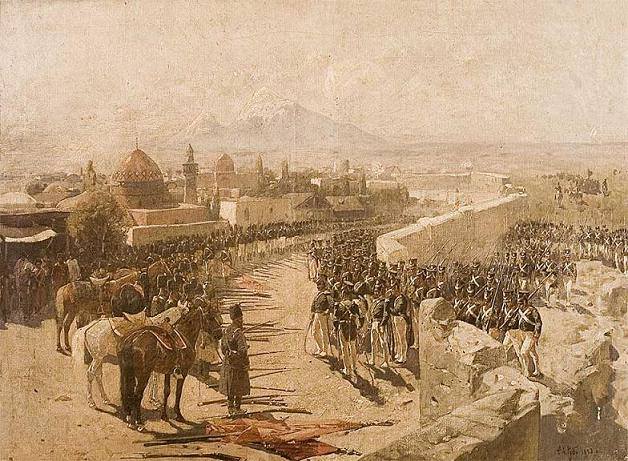
Painting by Franz Roubaud "Surrender of the fortress Erivan (Yerevan) October 1, 1827". 
City Erivan was before the Russian invasion and changes in the ethnic coloration a Turkish city.


Rossiya sozdala armyanskuyu oblast' imenno na territoriyakh azerbaydzhanskikh khanstv. (SOBRANIYe AKTOV" OTNOSYASHCHIKHSYA, K" OBOZRENIYU ISTORII ARMYANSKOGO NARODA, chast' II. Moskva 1838. str. 17.)
Russia created the Armenian region in the territory of the Azerbaijani khanate. (AKTOV MEETING RELATING, Rb Review Armenian history, Part II. Moscow, 1838. p. 17.)


Even Prof.Justin Mccarthy says :
1827-1829
"Russians did give free land to the Armenians.
the Russians forcing the Muslims out of the Caucasus and taking Armenians in to the Caucasus
Turkish population in Yerevan was higher then the Armenian population.
The Europeans, have refused to act honestly to Turkey.
Countries does not have friends, countries has benefits!"

 "Ruslar Ermenilere karşılıksız toprak vermiştir.
Ruslar Kafkaslardaki Müslümanları kovup, Ermenileri yerleştirmiştir.
Erivan'da Türk nüfus, Ermeni nüfusundan fazlaydı.
Tek kelimeyle Türklere dürüstçe davranmayı reddeden Avrupalılar var.
Ülkelerin dostu yoktur, çıkarları vardır!"


1840 Kervansaray, G.Gagarin  - Erivan
bugün Ahır! olarak kullanılıyor.
1840 год. Г.Гагарин. Караван--сарай в Эривани
1840 Turkish Caravansarai by G.Gagarin - in Yerevan today used as BARN!


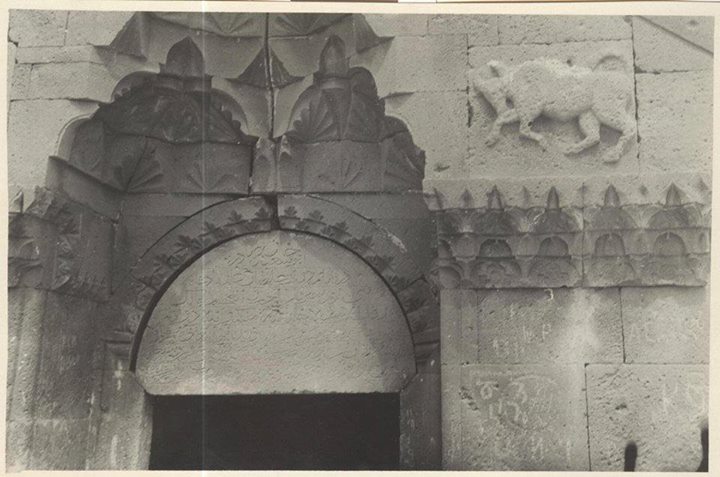
"Selim Kervansaray (Erevan Erivan, 12-13 yüzyıl) yakın.  
Girişinde eski resimleri, Arap alfabesi bir yazıt var. Diğer yazı silindi." 
Elşad Alili.

"Giriş kitabesi Arapça demesine rağmen Hem Kervansaray Hem de kitabe buram buram Selçuklu kokuyor! Ben Selçukluyum diye bağırıyor!  Ani harabesini donatıp yaptırırken biz salaklar; onlar da kitabeyi silip Ermeni Anıtı diye dünyaya yuttururlar!"  
Osman Çataloluk.


- "After all, the false hypothesis that the Turks migrated to the Caucasus and Asia Minor "later than all" is the cornerstone of Armenian historical and ideological pseudo-science that made it possible to substantiate Armenian claims to the lands of neighbouring peoples and countries. Now that this cornerstone is taken away by European science - the same science that proposed this very false concept of "Turks - nomads from the Altai" two centuries earlier, Armenians are compelled to make up new stories to save their false historical and ideological concept about "the great civilizing role of the Armenians in history and culture".


In the light of these new studies by European science, the false hypothesis about "Turkic incomers" collapsed (we do not deny the great migrations on the continent, resulting in Turkic and other peoples, including Armenians, migrating to the Caucasus and Asia Minor at various times). That is to say Turks have been living in the region since ancient times and Turkic peoples moved here from the east and north of the Asian continent in different periods.


But the most curious thing in the final resolution adopted at the end of the conference of the "new Mkhitarists" was the postulate that "the confirmation of the civilizing role of the Armenians needs no falsification". Aha! So until now the Armenian media, scientists and various politicians have been falsifying and lying in their attempts to prove the "ancient Armenian origin" of all that exists and existed in the Caucasus and Asia Minor? This phenomenal and frank confession by the Armenian "new Mkhitarists" can only be welcomed.


And now a few words about such a hasty admission by the Armenian luminaries of historical pseudo-science. There is no doubt that an important reason for this is the deliberate policy of Azerbaijan to expose Armenian historical lies through the publication of quotations from medieval manuscripts, archival materials and ancient sources that contradict the postulates of "ancient Armenian" lies. We have some reason to believe that it is the activity of the Azerbaijani media and political figures that is the main cause of the current mobilization of the Armenian new Mkhitarists. In particular, as we noted above, they were especially hurt by the recent presentation in Azerbaijan of the first volume of the book "Fraud Busters" written by the head of a department at the Presidential Administration and political analyst, Fuad Axundov. That is why the article in Golos Armenii about the Armenian conference in Yerevan and Xankandi is headlined "Falsifiers will be answered". This is a kind of "Armenian" answer to foreign scholars listed in the book "Fraud Busters" published in Azerbaijan.


Another thorn for the Armenian falsifiers are projects of the Centre for the History of the Caucasus at the Institute for Public Policy Research Azer-Globe, in particular the creation of the website erevangala500.com, which clearly proved that the Armenians are incomers in Azerbaijan's Iravan khanate and the Armenian authorities deliberately destroyed the ancient Azerbaijani city of Iravan in place of which the remade city of Yerevan now stands. The Armenian side is particularly irritated and concerned about the fact that the Centre for the History of the Caucasus at the Institute for Public Policy Research Azer-Globe found the work of the historian of Armenian origin I. A. Orbeli "Inscriptions of Gandzasar and Avaptuk", which was considered defunct and was published in St. Petersburg in 1919. This work contains valuable inscriptions from the Gandzasar monastery complex in Nagornyy Karabakh and the surrounding area, which indicate that these sites are part of Albanian architectural-historical heritage and the Autocephalous Church of Albania, and thus do not belong to the Armenians.


It is not in vain that participants in the Armenian conference on 29 June visited the Gandzasar monastery, because now they will have a lot of work to do to save their lies about its belonging to Armenian heritage. In this light, it is no exaggeration to say that the current inscriptions of the Albanian Gandzasar complex are threatened with destruction and falsification because Armenian liars will stop at nothing to misappropriate the cultural and historical heritage of other nations.


To sum up, it should be noted that Azerbaijani science and media, which have found the weak points of the false Armenian historical-ideological concept, should extend the front of research, especially archival sources and manuscripts that clearly refute Armenian falsifications. However, this research should involve foreign scientists and attract the attention of foreign media and the scientific community, which will help to deliver the truth about the history of our region and Armenian falsifications to different parts of the world." 


Author: Rizvan HUSEYNOV Baku


26 Ağustos 2014 Salı

How The Turks Helped Ireland During The Great Famine


164 years ago, during the Great Famine in Ireland, the Ottoman Empire sent £1,000 sterling (about $1,683,000 US dolars today) and 5 shiploads of food to Drogheda, Ireland.

Ireland was ridden with famine and disease between 1840 and 1850. Also known as the Great Hunger, this famine had lasting effects: at least one million people died due to famine-related diseases and more than one million Irish fled, mainly to the United States, England, Canada, and Australia.

The Ottoman ruler at that time Sultan Abdülmecid (Abdul-Majid) declared his intention to send £10,000 sterling to Irish farmers but Queen Victoria requested that the Sultan send only £1,000 sterling, because she had sent only £2,000 sterling herself ( 336,656 US Dollars) . The Sultan sent the £1,000 sterling but also secretly sent 5 ships full of food. The British administration tried to block the ships, but the food arrived secretly at Drogheda harbour.

This generous charity from a Muslim ruler to a Christian nation is also important, particularly in our time when Muslims and the Turks are often unfairly accused of human rights violations.


PS:
1- While the Turkish soldiers starving, who guarded the ships.
2- A claim was made by a US professor of law, Francis A. Boyle that the Famine was genocide by the British against the Irish, meaning that the famine was part of a deliberate policy of planned extermination. !


_______________